Hope Revival
- May 19, 2026
Every year in May, the global community unites to mark Mental Health Awareness Month. Amid compounding daily stressors, economic shifts, and volatile humanitarian contexts, countless individuals experience psychological exhaustion and burnout, often carrying these heavy cumulative burdens silently.
According to the World Health Organization (WHO), mental health is far more than the absence of mental disorders. It is a state of well-being that enables individuals to cope with the stresses of life, realize their abilities, learn and work well, and contribute meaningfully to their communities.
Protracted Crises and Psychosocial Impact
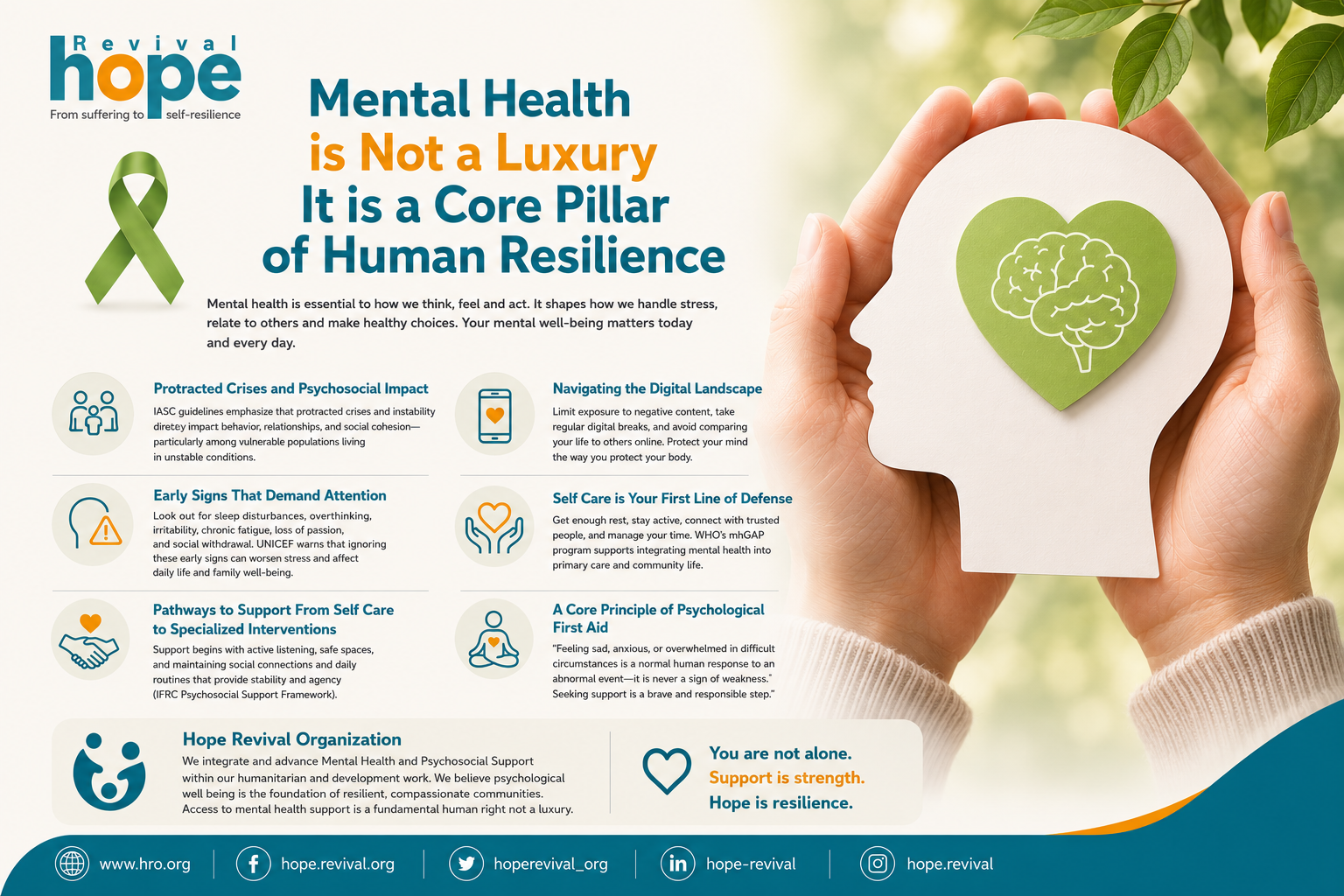
In environments shaped by ongoing social and humanitarian challenges, chronic stress takes a quiet but heavy toll. The Inter-Agency Standing Committee (IASC) Guidelines on Mental Health and Psychosocial Support in Emergency Settings emphasize that protracted crises and instability directly impact behavior, relationships, and social cohesion—particularly among vulnerable populations living in unstable conditions.
Early Signs That Demand Attention
Psychological distress often begins with subtle physiological and behavioral shifts: sleep disturbances, overthinking, heightened irritability, chronic fatigue, loss of passion, and social withdrawal.
UNICEF warns that prolonged neglect of these early warning signs exacerbates the impact of stress on daily functioning and family dynamics, significantly affecting the psychosocial development of children and youth.
Navigating the Digital Landscape
In today’s interconnected world, stressors are no longer confined to physical realities. Excessive exposure to social media and continuous consumption of distressing news act as silent threats to emotional stability. International mental health agencies strongly recommend implementing “digital detox” practices, setting boundaries around distressing content, and avoiding the trap of virtual comparisons that fuel chronic anxiety and discontent.
Pathways to Support: From Self-Care to Specialized Interventions
The International Federation of Red Cross and Red Crescent Societies (IFRC) frameworks highlight that psychosocial support does not always require complex clinical protocols. Instead, it begins with foundational elements:
Activating active listening networks.
Fostering safe environments that restore a sense of security.
Maintaining social connections and daily routines that provide stability and agency.
Complementing this approach, the WHO Mental Health Gap Action Programme (mhGAP) underscores that self-care—including adequate rest, physical activity, connecting with trusted peers, and effective time management—serves as a primary line of defense. This approach integrates mental health organically into primary health care and community resilience.
A Core Principle of Psychological First Aid (PFA):
“Feeling sad, anxious, or overwhelmed in difficult circumstances is a normal human response to an abnormal event—it is never a sign of weakness. Seeking psychosocial support or consulting a specialist during times of exhaustion is a powerful step of self-awareness and personal responsibility.”
Hope Revival Organization: A Sustainable Commitment to Human Well-being
Driven by this holistic vision, Hope Revival Organization (HRO) stands as a leading institution dedicated to integrating and advancing Mental Health and Psychosocial Support (MHPSS) within its humanitarian and development frameworks.
We firmly believe that the psychological well-being of individuals is the cornerstone of building more cohesive, compassionate, and resilient communities. Ensuring access to mental health support is not a luxury—it is a fundamental human right.
#MentalHealthAwarenessMonth #MHPSS #HumanitarianResponse #PublicHealth #WellBeing #Resilience #HopeRevivalOrganization #WHO #IASC #SelfCare